
Continuing from my prior entry, in this article, I want to describe how the game emerged and took on its own identity.
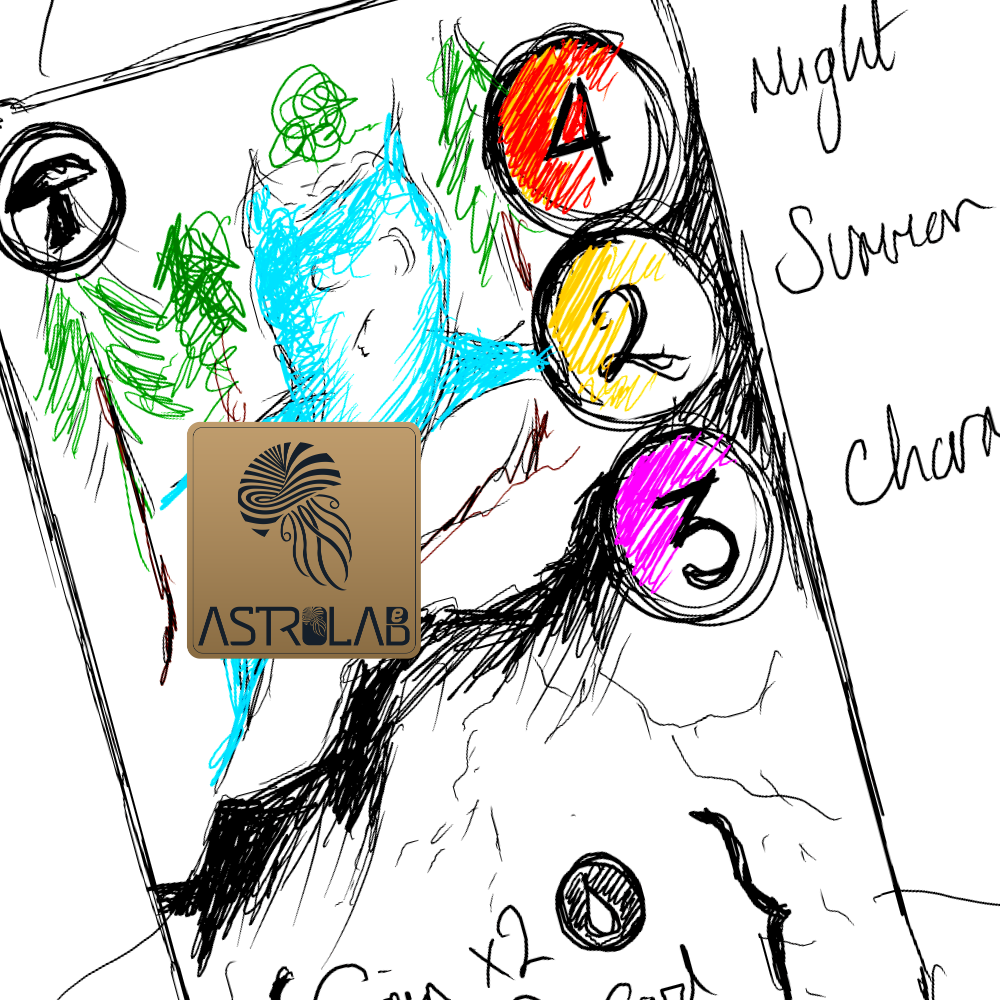
Deciding on a fantasy theme felt right. Games can fall into a fantasy (Magic: The Gathering), science fiction (Netrunner) or real-world (Air, Land and Sea). I felt the bright colours – the rich greens and autumn fire contrasting with cool ghostly blues and shimmering yellows would look fantastic. And the nature-based images along with magical spirits and sprites might evoke “Willow The Wisp” and other forest-themed fantasies.
Extrapolating further, Acorns and leaves could represent icons and symbols. I have always loved the works of Studio Ghibli and felt a distinctly local British example would work really well with the ancient lore and stories past down through generations. Timeless woodlands, mysterious moors, evocative tors and rolling green landscapes aplenty!
For me, the battle of nature – with its rich, evocative life – under threat from a greedy corporate force hell-bent on demolishing the forest for profit, would act like the perfect catalyst for gameplay. Each player would take on the asymmetric role of a spirit animal warrior and fight against the threat of pollution and the destruction of their home.


From here, disparate notes, collected images and research was pulled together into a full outline. After settling on an introduction, set-up and overall goal for the game, I began consolidating ideas I liked from the mechanics of other board and card-based games.
Some ideas I liked were to have each player place a card from their hand in turn. Each card would have its own ability. Except, all players would start with matching “seed” cards and they would need to make a decision on how to use what they had in hand: Either, “place” a card from hand to defeat an enemy, “place” to acquire a new, more powerful card (in the deck-building aspect) or “place” in reserve to gain an ongoing effect.
I didn’t want to overcomplicate the basic 3 actions but wanted to add more asymmetry into how each player could act and goals they could achieve. Players could “out bid” each other to gain extra-powerful cards or steal from others in the combined defeat of an enemy. And from my initial spark for the game, the “wildcard” could become a “pollution” card that could act to infect other cards around them.

For me, an “game outline” consists of generating an introduction to describe the world and reason for the game to unfold – which might also include some basic gameplay rules. Then I break the game down into rules and an overview of the mechanics. Game components, glossary, and descriptions of card types and their capabilities would then follow. Finally, I would expand with components, inspirational colours and design cues.
Taking all of the above, I would then have a clear idea how the game looks and feels. I could then finish by creating a detailed gameplay rulebook, carefully thinking about actions some players might want to take, holes or problems within actions. Of course, no matter how much you think about these things, getting a simple prototype produced for play-testing is vital. But that’s a few steps away yet.
In Log 3, I will look at research and idea development, turning sketches into a distinct game.
© JD FitzRoy 2024
Leave a Reply