
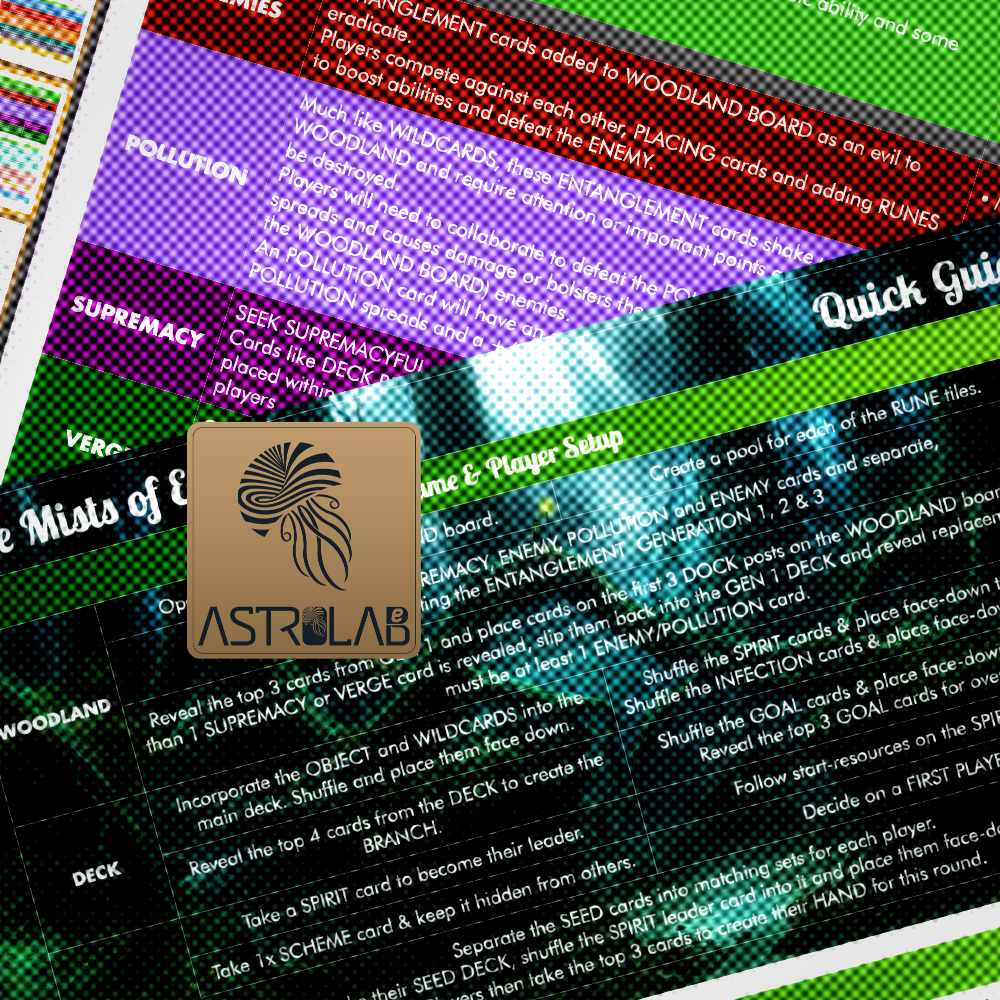
A look at the creation and shaping of an outline for designing a card game. This details the structure, components, and purpose to assist in a streamlined and organised developmental approach.
by JD FitzRoy
After my prior posts to describe the initial inspiration and research into the development of this card game, this article will focus on developing these ideas into what I would call an outline or design brief.
Keep up to date with the progress thus far:
- Game Design Log 1: Finding Ermwood
- Game Design Log 2: Defining Ermwood
- Game Design Log 3: Researching Ermwood
- Game Design Log 4: Dartmoor
- Game Design Log 5: Shaping Ermwood
The Outline Description
An outline or design brief is an extensive document where ideas, terminology, lore, gameplay mechanics and all other elements are consolidated, expanded upon and developed. The goal by the end of writing an outline is to be able to quickly identify and explain all aspects of gameplay mechanics along with some design, theming and lore to build a fully rounded idea of the game.
This document can thus be a useful reference tool for the designer or design team, but also help bring the game through play-testing and into full production and publication.
The composition of this outline is a fantastic way to help the designer build a solid grounding on all aspects, from components to set-up and gameplay rules. These will help organise ideas and get a good grip on how a player will understand and play the game. For example, getting an idea on speedy and efficient setup will help make things easier for the player.
I find it works best when an outline includes.
[Click on each item below to gain more information on what they contain]:
Introduction
A brief summary to help a reader understand the point of the game and how to navigate the outline.
The Story & Lore
A couple of paragraphs to help a reader understand the beating heart of the game. Beyond the dry mechanics, this is the point for the player to want to play the game. What is the world you are creating and why should we care!
Gameplay Guide & Rules
A brief overview of gameplay and some rules to focus the reader with a solid grounding of what to expect and how to play the game.
Design Goals, Colours & Inspirational Words
Perhaps not essential but I like to include some elements that inspire and fill out the context.
Gameplay Structure
A brief view on what each player can do as an action and how the rounds or series of actions takes place.
Game Components
I like to provide a simple list of all components needed to play the game. This can also help us identify what is available and what each element means for gameplay. It can be broken into two lists, one for general game components, the other for player-specific components. As with other aspects, this can be extracted for packaging material once the game goes into production.
Terminology
When inventing or using specific words to describe repeated actions during gameplay, I think it’s vital to have a reference list. This will help those who want to learn and play the game, but also those navigating the outline.
Key Mechanics
An expanded look at mechanics of game play with core themes, actions and resultant outcomes. This helps understand what to do in the game and why.
Card Breakdowns
As a card game, the priority for actions, abilities and goals will derive from a breakdown of types of cards, what and how to use them and when.
Game Setup
After covering all the basics, now comes a list and features for how to set up the game for gameplay. This need only be a step-by-step guide with items like the identification and placement of components, which cards to separate out, shuffle and how to apportion items for all players in order to be ready to begin the game.
Gameplay Breakdown
A deeper discussion of moves available, the process and actions each player can take along with unique and rare abilities and bonus options that might be unlocked during gameplay.
Endgame Breakdown
A specific section is important to describe when and how the end of the game is triggered, how to tally up points, determine the winner and sort out any ties or issues that might be encountered.
Components & Design Brief
With all the basics covered, I would now discuss some of the finer points of design. This would include some descriptions, themes and colours to help build a picture for the design of different items in order to be quickly identified. At the end of this outline, I might add some basic designs or inspiration from other works to help build a cohesive image.
Details Summary
I would end with a full breakdown of each card and object in a comprehensive reference table. This builds cross-reference tools which will help you and the players of the completed game. For example, a code number on each card could allow players to reference a specific card’s functions for deeper clarification. It’s quite common that game items don’t have enough room to fully explain every aspect of their function, so this detailed summary can be of great help through production to gameplay. And, of course, the more organised you can be here, the better it will be along the way to make any alterations.
Variations on this type of outline can be shaped to help compose all aspects of a game, dependent upon its type and size.
As a final assembly from the outline, I would then produce a Quick Guide. An example of this can be seen at the end of this article.
Quick Guide
Once I’ve assembled and am happy with this outline, I would extract the most crucial points to create a 1-2 page guide. This is something that play-testers and others can use to quickly understand the key rules and play the game without the need to reference the full manual or outline.
After this brief overview of the contents and some examples of an outline, I will next dig a little deeper into developing and shaping this document so that a cohesive game can be imagined. This will then allow us to step into some graphic design and quick prototyping before gameplay testing.
Below are some key extracts from The Mists of Ermwood outline:


© J.D. FitzRoy 2024-2026
Leave a Reply